


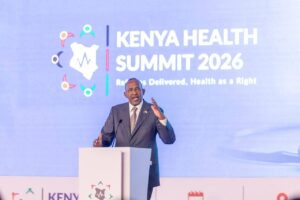
The Kenya Health Summit 2026 brought together government, civil society, health professionals, communities, researchers, development partners and other actors to reflect on the country’s health sector and chart the path towards Universal Health Coverage (UHC).
For civil society, however, the Summit was more than an opportunity to listen to policy commitments. It was an important moment to reflect on what those commitments mean for communities and what must happen next to translate national health priorities into tangible improvements in people’s lives.
Health financing must deliver results
Health financing and the implementation of the Social Health Authority (SHA) remained central to the discussions.
Participants raised concerns about the continued challenge of bringing workers in the informal sector into the social health insurance system and the effectiveness of voluntary contribution models. The discussions pointed to the need for sustainable and equitable approaches to health financing while ensuring that communities understand and can meaningfully participate in ongoing reforms.
For CSOs, engagement with SHA cannot be limited to awareness creation. Civil society must have a meaningful role in policy and implementation processes, bringing community experiences and evidence into decision-making and helping identify gaps that require corrective action.
Equally important is how health resources are managed at county and facility levels. The availability of funding should not be measured simply by allocations or collections. The ultimate test must be whether resources translate into quality services, better access and improved health outcomes.

Primary health care requires implementation, not just commitments
Primary Health Care (PHC) remains the foundation of Kenya’s journey towards UHC. The ambition to establish functional Primary Care Networks (PCNs) across all 47 counties represents an important step in strengthening the health system.
Yet implementation challenges remain, including financing constraints, human-resource gaps, multidisciplinary team availability and the need for a complete and effective regulatory framework.
The post-Summit reflection therefore emphasized the need to move beyond policy announcements and focus on whether PCNs are actually functional at community and facility level.
For civil society, this means monitoring implementation, documenting county experiences, advocating for adequate financing and supporting meaningful community participation in PHC governance.

Maternal and newborn health must remain a national priority
Maternal and newborn health featured prominently through the “Every Woman, Every Newborn, Everywhere (EWENE)” agenda.
While there is growing interest in innovations and strategies to improve outcomes, participants emphasized that maternal and newborn health must remain a central priority in Kenya’s health agenda. Functional referral systems, emergency transportation, quality services and timely access to care are essential to preventing avoidable deaths.
Civil society has an important role in ensuring that commitments under EWENE translate into measurable action and accountability, particularly at county and community levels.

Digital health and innovation present new opportunities
The Summit also demonstrated the growing role of technology and innovation in transforming healthcare.
From digital health platforms to innovations such as drone delivery of medical commodities, emerging technologies have the potential to address barriers to healthcare access, particularly in hard-to-reach communities.
However, innovation must be driven by evidence, equity and the needs of communities. CSOs can contribute by documenting experiences, generating evidence, connecting innovators with policymakers and advocating for solutions that demonstrate real impact.
The Summit also highlighted opportunities for stronger partnerships between civil society, universities and training institutions to support research, innovation and the development of the next generation of health leaders.
Community voices must move from the margins to the centre
One of the strongest reflections emerging from the post-Summit engagement was the need for more meaningful community participation.
While community representatives, Community Health Promoters, facility managers and grassroots actors were present at the Summit, participants questioned whether their experiences and concerns were adequately reflected in high-level conversations.
Representation alone is not enough.
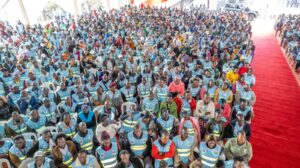
Meaningful participation requires communities to have the opportunity to speak, share evidence, challenge assumptions and influence decisions.
Future national health platforms must therefore create deliberate spaces where grassroots experiences can shape policy conversations. The voices of those who experience health-system challenges every day must be treated as evidence, not simply as background perspectives.
Civil society needs a stronger and more strategic position
The post-Summit reflection also raised an important question: Where is civil society positioned in Kenya’s national health policy conversation?
CSOs are major actors in health service delivery, community engagement, research, advocacy, accountability and the protection of health rights. Yet participants felt that civil society could have had greater visibility and influence during the Summit.
A dedicated CSO Pavilion or CSO Village is one way of creating a more visible and coordinated platform for civil society organizations to showcase their work, evidence, innovations and community experiences.
Beyond visibility, however, CSOs need to be engaged much earlier in the planning of major national health platforms. Early participation would allow civil society to contribute to agenda-setting, identify priority issues and ensure that community and CSO perspectives are integrated into the design of national conversations.
From fragmented voices to a common CSO position
Perhaps the most important opportunity emerging from the post-Summit reflection is the need for greater coordination among health civil society organizations.
A fragmented advocacy environment can limit the ability of CSOs to influence policy. A coordinated position, grounded in evidence and community experiences, can provide a stronger platform for engagement with government, political leaders and other decision-makers.
This is particularly important as Kenya moves towards the Beyond Vision 2030 development conversation and preparations for political party manifestos.
Health must remain central to these conversations, not as an isolated sector, but as a fundamental driver of human development and economic productivity.
Sustainable health financing, functional Primary Care Networks, human resources for health, maternal and newborn health, quality healthcare, social protection, food and nutrition security, digitalization and health-system strengthening must all feature prominently in the national development agenda.
Health must be a manifesto priority
The emerging political environment also presents an opportunity for civil society to influence the health priorities that political parties and leaders take to citizens.
The post-Summit reflection challenged the tendency to measure health investment primarily through the construction of new facilities.
Building health facilities is important, but infrastructure alone does not deliver healthcare.
A functional health system also requires skilled health workers, medicines and commodities, equipment, referral systems, financing, digital infrastructure, accountability and quality services.
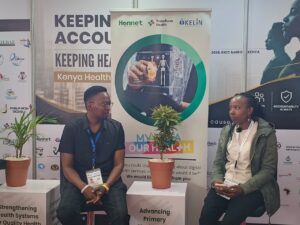
HENNET and its partners can therefore contribute to the development of a consolidated civil society health position that identifies priorities at ward, county and national levels, providing a common framework for engaging political leaders and influencing manifesto development.
Sustaining domestic investment in health
The changing global development financing environment also makes domestic health financing increasingly important.
With donor resources becoming more constrained, Kenya needs a realistic and sustainable approach to financing its health system. This requires conversations not only about how much money is available for health, but also how resources are raised, allocated, managed and translated into outcomes.
Civil society has a critical role in advocating for equitable domestic resource mobilization, adequate health budget allocations, efficiency, transparency and accountability.
The work after the Summit matters most
The Kenya Health Summit provided an important platform for dialogue, networking and exchange. It created opportunities for government, civil society, communities, researchers and development partners to connect and share perspectives.
But the true measure of the Summit will not be the number of commitments made or conversations held. It will be what happens after the Summit.
For HENNET and its members, the next phase must focus on follow-up, coordination, evidence generation, accountability and sustained engagement.
Civil society must continue to ask difficult questions: Are commitments being implemented? Are resources reaching communities? Are Primary Care Networks functional? Are women and newborns receiving timely and quality care? Are health reforms improving people’s experiences? Are communities meaningfully participating in decisions that affect their health?
These questions should remain at the centre of Kenya’s health policy conversation.
The post-Summit reflection therefore offers a clear direction for civil society: engage earlier, coordinate better, amplify community voices, use evidence, strengthen visibility and hold decision-makers accountable.
As Kenya moves from the Kenya Health Summit 2026 towards the next phase of its health and development agenda, the message from civil society is clear:
The time for dialogue must lead to delivery. Commitments must translate into action. And health reforms must ultimately be judged by whether they improve the lives and health outcomes of the people of Kenya.