


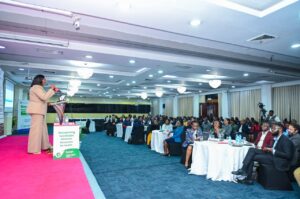
The Health NGOs Network (HENNET), in partnership with the Ministry of Health, convened the second Stakeholder Partners Meeting at the Kenyatta International Convention Centre (KICC), bringing together government, civil society, development partners and other health-sector stakeholders to advance key priorities emerging from previous engagements.
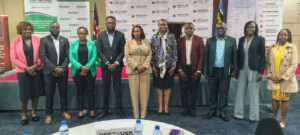
The meeting provided an important platform to assess progress, identify implementation gaps and agree on practical actions needed to translate Kenya’s health commitments into measurable results.
In her opening remarks, HENNET Chair and Executive Director at LVCT Health, Dr. Lilian Otiso, emphasized that Kenya must move beyond dialogue and commitments towards implementation, accountability and measurable impact.
Dr. Otiso called for accelerated progress on the Kenya Health Compact, meaningful integration of civil society organizations (CSOs) into Government-to-Government (G2G) implementation and accountability mechanisms, fulfilment of health financing commitments, operationalization of the Social Accountability Framework, and stronger primary health care (PHC) systems.
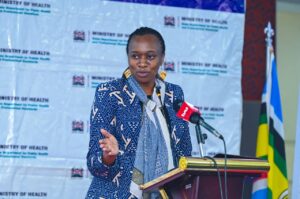
She further emphasized the importance of strengthening CSO participation in health policy, planning and financing processes at both national and county levels. She called for the development and advancement of a CSO Shadow Manifesto for Health as a unified civil society agenda to guide health policy reforms, financing priorities and accountability efforts over the next five years and beyond 2030.
“Health reforms must ultimately translate into better access, quality, equity and outcomes for every Kenyan.”
Ministry of Health calls for collective action
Speaking during the meeting, Principal Secretary for Health, Ms. Mary Muthoni CBS, called for stronger collective action to move Kenya’s public health agenda from commitments to measurable results.
The PS highlighted progress made through the enactment of four major health laws in 2023 and underscored the need to complete the Quality Healthcare and Patient Safety Bill to strengthen standards of care and patient safety.

She reaffirmed the Ministry’s commitment to working closely with civil society and other health partners, noting that government cannot deliver the country’s health agenda alone. She called on stakeholders to contribute their expertise, resources, innovation and community experience towards achieving shared health priorities.
The PS also called for a more coordinated MoH-CSO-partner implementation mechanism to translate agreed priorities into joint action, with clear responsibilities and measurable results.
Strengthening disease preparedness and response
Disease preparedness and response featured prominently during the engagement, with stakeholders highlighting the need to strengthen Kenya’s capacity to prevent, detect and respond to health emergencies.
Key priorities include strengthening community-based surveillance and risk communication, addressing gaps in isolation and infection-prevention facilities, and enhancing laboratory preparedness and health workforce capacity.
Stakeholders also emphasized the need to sustain surveillance and targeted response for Mpox, polio and measles, while strengthening cross-border and regional collaboration given Kenya’s exposure to regional disease transmission.
Sustained financing for public health preparedness—including commodities, surveillance, vaccination and emergency response—was identified as critical. Partners were also encouraged to support identified gaps in isolation infrastructure, staffing, diagnostics and response capacity.
Regular technical briefings between government, CSOs and partners were proposed to facilitate information sharing on outbreak trends, preparedness measures and priority gaps.
Preparedness for climate-related emergencies
With Kenya facing increasing risks from climate-related emergencies, stakeholders also prioritized preparedness for El Niño, flooding and other climate-related risks.
The meeting called for the circulation and implementation of the El Niño Contingency Plan, alongside joint national and county-level preparedness and vulnerability assessments in high-risk communities and health facilities.
Stakeholders further highlighted the importance of strengthening Water, Sanitation and Hygiene (WASH) preparedness, disease and nutrition surveillance, and rapid sharing and escalation of alerts during emergencies.
A consolidated mapping of partner capacities, resources and areas of support was proposed to ensure that available resources are aligned with the contingency plan and identified areas of need.
Advancing malaria prevention and public health action
The Ministry of Health also outlined key interventions aimed at strengthening malaria prevention and treatment. These include the planned distribution of 10 million insecticide-treated mosquito nets and the introduction of multiple first-line therapy for malaria to address emerging concerns around drug resistance.
The PS emphasized that public health action must extend beyond health facilities into communities, through improved sanitation, handwashing and disease prevention.
She also announced plans to establish a Kenya Public Health Day, providing an opportunity to mobilize Kenyans around practical actions that promote healthier communities.
The Ministry further committed to facilitating stakeholder exposure to Kenya’s new BSL-3 laboratory facilities, strengthening understanding of the country’s investments in outbreak preparedness and laboratory capacity.
Strengthening accountability and health financing
Accountability remained a central theme throughout the engagement.
HENNET called for the establishment of a joint accountability mechanism to track implementation of agreed health priorities, with clear responsibilities, timelines, resources and measurable indicators.
The network also emphasized the need for stronger accountability and information-sharing around externally financed health programmes and investments, as well as the fulfilment of health financing commitments.
Operationalizing the Social Accountability Framework at both national and county levels will be critical in enabling CSOs and communities to play a meaningful role in monitoring health service delivery and government commitments.
From dialogue to delivery
The Stakeholder Partners Meeting builds on the commitment made during the previous Ministry of Health–CSO engagement to strengthen collaboration and ensure that agreed priorities translate into action.
For HENNET, the outcome is clear: Kenya’s health agenda cannot remain on paper. Commitments must be accompanied by clear responsibilities, adequate resources, realistic timelines and mechanisms for tracking progress.
As Kenya continues to pursue Universal Health Coverage and strengthen the resilience of its health system, sustained collaboration between government, civil society, development partners and communities will remain essential.
The collective call from the meeting is therefore straightforward: move from decisions to action, from commitments to implementation, and from implementation to results.
Ultimately, the success of Kenya’s health reforms will be measured not by the number of commitments made, but by whether they translate into better access to quality healthcare, greater equity, stronger accountability and improved health outcomes for every Kenyan.