


At a time when global health financing is under unprecedented strain, one message rang clear from Nairobi: civil society is not a gap-filler. It is a co-governor of health systems.
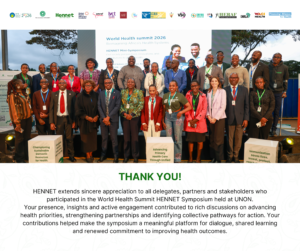
During the World Health Summit 2026, the Health NGOs Network convened a high-level Mini-Symposium that brought together government leaders, civil society actors, and global health experts to confront a defining question: what happens to health systems when funding shrinks and expectations grow?
The conversation unfolded against a stark backdrop. Global health financing is contracting rapidly, with development assistance declining, major funding streams like PEPFAR significantly reduced, and key global mechanisms falling short of their replenishment targets. At the same time, countries like Kenya continue to operate below continental commitments, with health spending still far from the Abuja target. But beyond the numbers, the real impact is already being felt. Community health systems are weakening, HIV prevention gains are at risk, SRHR services are quietly eroding, and vulnerable populations are carrying the heaviest burden. This is not a future crisis. It is a present reality.
Across the symposium, speakers challenged a long-standing narrative that has shaped global health for years. Civil society has often been positioned as a support system that fills gaps left by governments. That framing was firmly rejected. Instead, a new consensus emerged: civil society is an accountability actor, a systems partner, and a co-governor of health systems. This shift is not just about language. It determines who sits at decision-making tables, who shapes financing priorities, who holds systems accountable, and who is resourced to act. Without this recognition, meaningful health system reform cannot happen.
A powerful thread running through the discussions was the need to rethink what health actually means. Health is not only about treatment. It is about prevention, environment, and systems. It is shaped by food systems, economic realities, environmental conditions, and the structural factors that determine whether people fall sick in the first place. This reframing pushes health beyond the clinic and places it firmly within a broader, multisectoral agenda. For civil society, this expands the scope of advocacy into spaces that have traditionally been seen as outside the health sector but are in fact central to it.
At the same time, the symposium surfaced several urgent risks that require immediate attention. Community-based systems, which have been central to gains in HIV and primary health care, are at risk of collapse if not deliberately financed and integrated into national systems. The SRHR financing crisis, while less visible globally, is already having serious consequences, particularly for women and girls in underserved areas who are losing access to essential services. The ongoing shift to Government-to-Government financing models also raises critical questions about the place of civil society within health systems. Without clear safeguards, accountability mechanisms that have taken years to build could weaken significantly.
In response to this evolving landscape, the symposium pointed toward a new playbook for civil society. There is a need to move as coordinated networks rather than fragmented actors, to engage Ministries of Finance with strong economic and accountability evidence, to protect community-led and prevention-focused models, and to expand advocacy beyond traditional health boundaries. Civil society must also push for increased domestic financing while ensuring that accountability remains central to how those resources are used.
What took place in Nairobi was not just a dialogue. It was a turning point. The outcomes of the symposium are now being carried forward into global platforms, including the upcoming World Health Assembly, where civil society will continue to advocate for stronger domestic financing commitments, safeguards within bilateral agreements, and formal recognition as a governance partner in health systems.
The global health landscape is shifting. Funding is shrinking, and systems are under pressure. But this moment also presents an opportunity to redefine leadership, responsibility, and power within health systems. The message from Nairobi was clear and decisive. Civil society is not stepping back. It is stepping up. And what happens next will depend on how well this role is recognized, resourced, and sustained.
The global health landscape is shifting. Funding is shrinking, and systems are under pressure. But this moment also presents an opportunity to redefine leadership, responsibility, and power within health systems.