


On 22nd April 2026, Health NGOs Network (HENNET) and other key stakeholders from government, civil society, and development partners met at the Kenyatta International Convention Centre for a high-level consultative meeting to focus on strengthening Kenya’s public health sector. The engagement jointly convened by the State Department for Public Health and Professional Standards and the Health NGOs Network (HENNET) provided a strategic platform for dialogue on emerging health priorities, collaboration opportunities, and system-wide reforms aimed at advancing a more resilient and efficient health system.
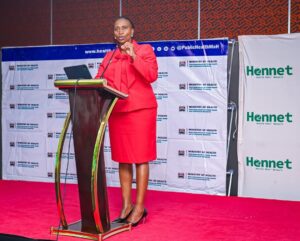
Madam Mary Muthoni, Principal Secretary, State Department for Public Health and Professional Standards
Principal Secretary for Health, Madam Mary Muthoni, in her opening remarks, she appreciated partners for their continued collaboration and emphasized that the meeting was a strategic platform for solutions-driven dialogue on emerging health challenges. She highlighted Kenya’s health sector reforms (2022–2025), anchored on key laws including the Primary Health Care Act (2023), Digital Health Act (2023), and Social Health Insurance Financing Act (2023), aimed at strengthening financing, infrastructure, workforce, and accountability.
She outlined government priorities such as operationalizing the Social Health Authority, expanding primary healthcare, accelerating digital health systems, and strengthening community health structures. However, she noted persistent gaps including low uptake of services, workforce shortages, disease burdens, and health inequalities. She stressed the need for urgent, coordinated action to ensure reforms deliver real impact.
The PS Mary Muthoni called for stronger multi-sector collaboration and a shift from policy to implementation. She also announced the Kenya International Public Health Conference and proposed a National Public Health Day to enhance awareness and coordination across counties.
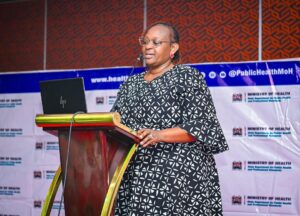
Dr. Margaret Lubaale, Chief Executive Officer at Health NGOs Network (HENNET)
Dr. Margaret Lubaale, CEO of HENNET, underscored the central role of civil society in co-governance of the health system, particularly in supporting reform implementation, linking community realities with policy processes, and strengthening accountability and transparency. She noted that the engagement was taking place at a critical juncture characterized by constrained health financing, ongoing reforms, and increasing public health pressures, necessitating a whole-of-government and whole-of-society approach. She highlighted that the platform had grown to include over 700 stakeholders, reflecting strong multisectoral engagement across civil society, development partners, and county representatives.
Dr. Margaret highlighted HENNET’s approach to health systems strengthening extends beyond health facilities to broader determinants such as nutrition, climate and health adaptation, smart agriculture, community health systems, preventive health, and social determinants of health. While acknowledging the transformative potential of ongoing health financing reforms, particularly the Social Health Insurance framework, she noted differing stakeholder perceptions regarding implementation and highlighted the importance of Health Technology Assessment (HTA) in guiding decisions on service inclusion, resource allocation, and cost-effectiveness.
She added that HENNET is developing a capacity-building toolkit to strengthen civil society engagement in HTA processes. She further called for the platform to evolve into a sustained coordination mechanism for evidence-based dialogue, policy engagement, implementation monitoring, and accountability, reaffirming HENNET’s commitment to documentation, follow-up, and actionable outcomes.
Civil society organizations emphasized their critical role in bridging community-level realities with national policy processes. They called for stronger inclusion in government-led health programs, improved coordination mechanisms, timely social contracting, and enhanced accountability in health financing. The need to strengthen community health systems, integrate mental health services, and ensure continuity of essential services such as TB and HIV care was also strongly emphasized.
The plenary discussions further highlighted cross-cutting issues affecting health outcomes, including limited inclusion of faith-based facilities, weak integration of non-health sectors such as transport and agriculture, and gaps in addressing occupational health needs for high-risk populations. Additional concerns included fragmented coordination between national and county governments, underfunding of primary healthcare, weak policy communication, challenges in refugee health integration, nutrition service gaps, and limited stakeholder engagement structures.
In response, the Ministry of Health emphasized the need for stronger coordination across all stakeholders, increased investment in preventive and primary healthcare systems, enhanced accountability mechanisms, and improved harmonization of service delivery standards. The importance of addressing social determinants of health, strengthening sanitation initiatives, and ensuring equitable access to healthcare services across all regions was also underscored.
Overall, the meeting reinforced a shared commitment to a more inclusive, coordinated, and people-centered health system. Stakeholders agreed that achieving Universal Health Coverage will require sustained collaboration, stronger implementation of existing reforms, and a deliberate focus on preventive and primary healthcare as the foundation of Kenya’s health system transformation.
By: Joy Gacheri (Communication and Media Asst)